This is a high level epidemiology quiz , not a high school test!!! All questions must include reasoning, solutions and response details. For instance, if you select A from question 1, you should resp
| 1. Questions 1 and 2 are based on the following information: You are called to investigate a possible health problem in an office building that may be due to a potential environmental toxin. You arrange with a company that occupies two levels of the building to follow all 300 office employees for 30 days. Every day the employees report their health status. Nothing happens until day 10, when 35 employees report of respiratory distress. On day 20, 70 employees report of respiratory distress. The remaining employees do not report any problems over the 30 day period. What is the incidence rate of respiratory distress in this study population?
1 point | |||||||||||||||||||||||||||||
| 2. What is the cumulative incidence of respiratory distress over a 30-day period?
1 point | |||||||||||||||||||||||||||||
| 3. Question 3 is based on the following data among women in the United States (US)
3.Based on the information provided, what can you conclude about the crude mortality rate from cervical cancer among women 30-49 years of age in the US?
1 point | |||||||||||||||||||||||||||||
| 4. Questions 4 and 5 are based on the following information: Imagine researchers have developed a new rapid screening test for tuberculosis, which they hope will replace the sputum culture (reference standard). To pilot this new test, 1,000 participants were given both test.
4. What is the specificity of the new rapid test for detecting tuberculosis (tuberculosis is defined as positive for sputum culture test)? Show your work, and report your answer as a percent rounded to the percent’s tenths decimal place (i.e., to the nearest 0.1%). (If no work is shown, half credit will be deducted from the grading of your response to this question, even if your final answer is correct.) Enter Answer Your answer will appear here. 1 point | |||||||||||||||||||||||||||||
| 5. If the true prevalence of tuberculosis were to decrease in the above study population, what effect would this have on the positive predictive value of the new rapid test for detecting tuberculosis?
1 point | |||||||||||||||||||||||||||||
| 6. Which of the following options best represents the term “incubation period”?
1 point | |||||||||||||||||||||||||||||
| 7. Question 7 is based on the following information: _________ surveillance: a system by which the public health authority receives reports submitted from hospitals, clinics, or other sources for dozens of notifiable diseases, such as rabies. _________ surveillance is a relatively inexpensive strategy to cover large areas, and it provides critical information. However, even though it may be required by law, this surveillance depends on people in different institutions to provide data, so data quality and timeliness are difficult to control.
1 point | |||||||||||||||||||||||||||||
| 8. Questions 8 and 9 are based on the following information: An unusually high number of students presented to the University Health Clinic with symptoms of gastrointestinal illness. Many reported having eaten in the dining hall after the football game on Saturday afternoon. Members of the Introduction to Epidemiology class were asked to conduct an investigation. Six hundred students were identified as having eaten in the dining hall at 5:00 PM on Saturday. Of these, half the students reported symptoms of gastrointestinal illness. The investigators identified potato salad, turkey burgers, shrimp salad, and cream pie as the foods that were served in the dining hall at 5:00 PM. All six hundred students who ate then in the dining hall were interviewed. The table below contains a summary of the data collected.
8. What is the difference in attack rates (i.e., risk difference) between students who ate the turkey burger and students who did not eat the turkey burger?
1 point | |||||||||||||||||||||||||||||
| 9. Which food is the most likely cause of the epidemic?
1 point | |||||||||||||||||||||||||||||
| 10. Questions 10 and 11 are based on additional information: The student investigators also collected the time of onset of symptoms for each of the students who were sick:
10. What is the median incubation period (in hours) for this outbreak assuming the exposure occurred at 5:00 PM on Saturday (i.e., hour zero)?
1 point | |||||||||||||||||||||||||||||
| 11. How would you describe this epidemic?
1 point | |||||||||||||||||||||||||||||
| 12. Questions 12 and 13 are based on the following information:
What type of study design is described above?
1 point | |||||||||||||||||||||||||||||
| 13. Based solely on the information provided, the conclusion that higher levels of per capita sugar consumption are associated with higher country-level age-adjusted prostate cancer incidence is:
1 point | |||||||||||||||||||||||||||||
| 14. Which option below best represents the main difference between cohort studies and clinical trials?
1 point | |||||||||||||||||||||||||||||
| 15. Which of the following statements is FALSE about randomization and masking in clinical trials? SELECT ALL THAT APPLY.
1 point | |||||||||||||||||||||||||||||
| 16. Choose the best study design from the list below for each of the research questions. Each study design can only be used once.
1 point | |||||||||||||||||||||||||||||
| Questions 17-19 are based on the following information: An epidemiologist is interested in novel risk factors associated with incident breast cancer in women, which could be potential therapeutic targets for future interventions. She proposed a prospective cohort study design to study these factors in middle-aged women and requested funding for 15 years of follow-up. She intends to recruit participants from five primary care clinics around the United States in 2020. | |||||||||||||||||||||||||||||
| 17. Which of the following best describes the target population of this proposed study? Select the ONE best answer.
1 point | |||||||||||||||||||||||||||||
| 18. Which of the following groups of individuals should certainly be excluded during screening for enrollment? Select ALL that apply:
1 point | |||||||||||||||||||||||||||||
| 19. The funding agency told the epidemiologist that resources were limited and requested she design a more efficient study to answer this research question. What is the best alternative study design that the epidemiologist should consider?
1 point | |||||||||||||||||||||||||||||
| Questions 20 and 21 are based on the information provided below: Alzheimer’s Disease is most commonly seen in older adults. The United States population has a much higher proportion of older adults compared to the World population. | |||||||||||||||||||||||||||||
| 20. If the crude incidence rates of Alzheimer’s Disease in the United States were age standardized to the World population, what would you conclude regarding the age standardized and crude rates?
1 point | |||||||||||||||||||||||||||||
| 21. Which of the following statement(s) is(are) true about the standardization described above? Select ALL that apply.
1 point | |||||||||||||||||||||||||||||
| 22. A small proportion of people who acquire OPAL fever die from it. The duration of the disease is approximately 2 weeks and for those who survive it, there is life-long immunity. Which of the following would result in a decrease in the incidence of OPAL fever in a given population?
1 point | |||||||||||||||||||||||||||||
| 23. Match the following terms to their corresponding descriptor. Please note each term may only be used once.
1 point | |||||||||||||||||||||||||||||
| 24. Which statement describes how a prospective cohort study is different from a case-control study?
1 point | |||||||||||||||||||||||||||||
| 25. Which of the following statements is FALSE?
| |||||||||||||||||||||||||||||
 a. 1.4 per 100 person-days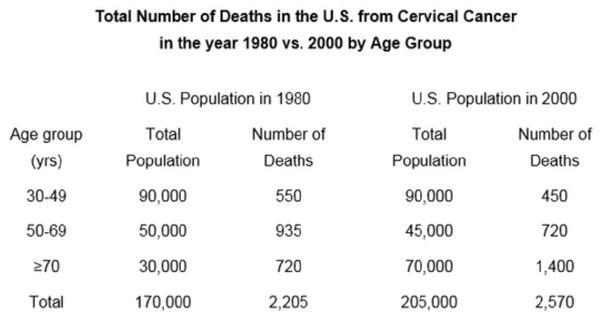

 a. Randomization is done to conceal treatment assignment.




