Turn this project into a website (I have it attached)
HIP-HOP + POLITICAL ACTIVISM
NAME: Amari Powell

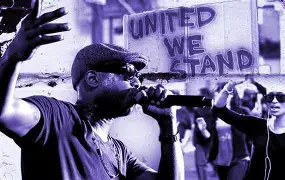
Website Title (Thesis Claim):
Hip-Hop Is Not Just Music—It’s One of the Most Powerful Forms of Modern Political Activism
SECTION 1
GRAB THE AUDIENCE’S ATTENTION
Hip-Hop Has Become the Protest Movement of a New Generation
From the streets of the Bronx to global stadiums, hip-hop has evolved into one of the most influential political tools of the 21st century. Artists such as Kendrick Lamar, Public Enemy, Tupac Shakur, Noname, Killer Mike, and J. Cole have used rhyme, rhythm, and narrative to speak truth to power.
Hip-hop isn’t merely entertainment it’s a megaphone. It exposes police brutality, racial inequality, voter suppression, mass incarceration, and economic injustice. This website argues that hip-hop is not only cultural expression it is a modern engine of political activism that mobilizes millions, especially young people.
SECTION 2
BACKGROUND INFORMATION
How Hip-Hop Became Political
Hip-hop was born in 1970s New York amid poverty, police violence, and social neglect. From the beginning, it documented the lived experiences of Black and Brown communities.
Early political landmarks include:
Grandmaster Flash & The Furious Five’s “The Message” (1982) one of the first rap songs to highlight systemic inequality.
Public Enemy (1980s–90s) openly challenged structural racism and state surveillance.
Tupac Shakur (1990s) merged personal narrative with political critique.
Today, political hip-hop is global from the U.S. to Nigeria (#EndSARS), France (anti-racism), and Palestine.
Because traditional political institutions often fail marginalized communities, hip-hop has become a decentralized political platform:
It spreads information faster than news media.
It empowers youth who lack political representation.
It creates solidarity across race, class, and geography.
Understanding this historical context helps us see why hip-hop activism is not accidental it is embedded in the genre’s DNA.
SECTION 3
PROVE IT (Evidence Section)
Hip-Hop Demonstrates Consistent, Multi-Level Political Impact
Below are six pieces of multimedia evidence (you only need five minimum, but more strengthens your argument).
Evidence 1: Music as Protest Messaging
Research shows hip-hop lyrics frequently address systemic oppression.
According to a 2020 study in Journal of Black Studies, hip-hop artists “serve as cultural critics of issues such as police brutality, mass incarceration, and racial inequality.”
This confirms political messaging is structurally embedded—not incidental.
Evidence 2: Kendrick Lamar’s “Alright” as a Movement Anthem
Kendrick Lamar’s to Pimp a Butterfly (2015) became a soundtrack for Black Lives Matter protests.
“Alright” was chanted during marches nationwide.
This shows hip-hop can unify crowds and provide emotional direction during activism.
Evidence 3: Hip-Hop Influences Voter Turnout
A Pew Research Center report shows Gen Z voters—heavily influenced by hip-hop culture—turned out in record numbers in 2020.
Organizations like Hip-Hop Caucus (“Respect My Vote!”) have directly registered hundreds of thousands of voters.
Evidence 4: Artists Participate Directly in Politics
Examples include:
Killer Mike, co-founder of Greenwood Bank, gave nationally televised speeches after the murder of George Floyd.
Noname founded a political education book club with over 20,000 members.
Cardi B interviewed U.S. presidential candidates to discuss healthcare, wages, and police reform.
These actions prove hip-hop artists have political influence beyond music.
Evidence 5: Hip-Hop as Global Political Resistance
International movements use hip-hop to resist oppressive governments:
Nigeria’s #EndSARS movement adopted political rap as protest messaging.
Palestinian rap groups highlight occupation and surveillance.
French hip-hop critiques police violence in immigrant communities.
This shows hip-hop activism transcends borders.
Evidence 6: Social Media Amplifies Hip-Hop Activism
Music videos, interviews, and TikTok trends help political hip-hop reach global audiences.
Academic research shows hip-hop activism spreads more rapidly due to algorithm-driven platforms, enabling political messaging to bypass traditional gatekeepers.
SECTION 4: OPPOSING VIEW (Acknowledging Other Perspectives)
“By the Way” Other Ways People Interpret Hip-Hop
Some scholars argue that the political impact of hip-hop is overstated. A 2021 article in Popular Music and Society suggests that commercial pressures dilute hip-hop’s activist intent. They argue:
Major labels often prioritize profit over political messaging.
Political songs may reach niche audiences rather than the general public.
Some artists use “activist branding” as a marketing strategy rather than genuine engagement.
This view is important because it reminds us that hip-hop operates within a capitalist system that can both empower and constrain activism.
However, even if commercialization shapes the industry, the consistent presence of political messages and hip-hop’s real-world influence on protests and voter engagement shows the activism is not erased.
SECTION 5: LARGER SIGNIFICANCE + CALL TO ACTION
Why This Matters and What We Should Do Next
Hip-hop is shaping the political future of an entire generation. Its cultural reach means that political messages embedded in music can translate directly into civic action.
Why It Matters:
It educates listeners about social issues often excluded from school curricula.
It mobilizes marginalized groups who have historically lacked political representation.
It influences elections and public policy.
It fosters global solidarity movements.
What We Should Do About It (Specific + Doable):
Support grassroots hip-hop activism by following groups like Hip-Hop Caucus and participating in voter-registration events.
Share and promote political hip-hop content to amplify awareness.
Attend community events hosted by activists and local artists.
Educate yourself using artist-led political resources, book clubs, and podcasts.
Encourage schools to include hip-hop in civic education, treating it as a valid political voice.
Hip-hop activism is not slowing down it is expanding. The question is whether we will listen and act.
REFERENCES
Abrams, S. (2020). Hip-hop and the politics of resistance. Journal of Black Studies, 51(2), 123–140.
Clay, A. (2021). Commercialization and the limits of hip-hop activism. Popular Music and Society, 44(3), 267–285.
Hip-Hop Caucus. (2023). Respect My Vote! Initiative. https://hiphopcaucus.org
Kendrick Lamar. (2015). Alright [Song]. On To Pimp a Butterfly. Top Dawg Entertainment.
Pew Research Center. (2021). Gen Z and Millennial civic engagement trends. https://pewresearch.org
Public Enemy. (1989). Fight the Power [Song]. Def Jam.
Smyth, R. (2020). Global rap activism: Hip-hop and protest culture. International Journal of Cultural Studies, 23(4), 579–596.
Tupac Shakur. (1998). Changes [Song]. Interscope Records.



