Seal Fault / geology
Exercise 6: Fault Interpretation University of Cyprus
Exercise 6: Fault Seal Analysis| Objective | Investigate the possibility of cross-fault seal for Fault A given a simple structure map. |
| Materials |
|
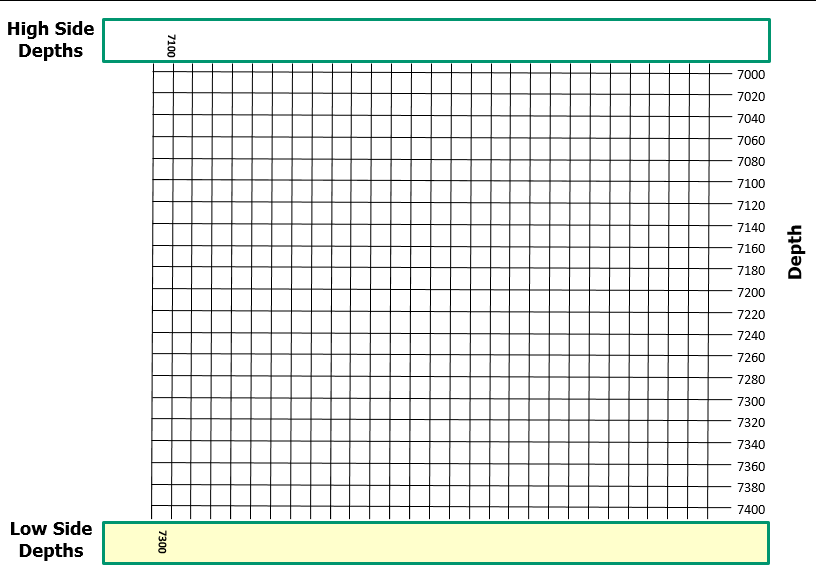
| Introduction | You are given a depth map for the top of a sandstone reservoir (Figure 1). The sandstone is 100 ft thick throughout the area of the map. Shale is 400 ft thick above and 400 feet thick below the reservoir sandstone. You have been asked if there is a depth at which we might have a potential cross-fault leak point? In other words, is there a depth along the fault at which the base of the sandstone unit on the high side of the fault is in contact with the top of the same sandstone on the low side of the fault? You can answer this question by constructing an Allan diagram (using Figure 2), which this exercise will take you through. | |
| Step | Action | |
| | Use a strip of paper to record the depth to the top of the reservoir sand along the high side of Fault A. The instructor illustrated this process during the exercise introduction. | |
| | Use Figure 2 (page 4) with the depth scale to mark the depth points for the top of the reservoir on the high side of the fault. Draw a line connecting the points. Suggestion: use one color for the high side (Steps 2 and 3) and a different color for the low side (Steps 4 and 5). | |
Continued on next page
Exercise 8: Fault Seal Analysis continued

Continued on next page
Figure 1. Depth map for the top of a reservoir sand that is offset by Fault A.
| Step | Action |
| | Since the sandstone is assumed to be 100 ft thick throughout the area, draw a line on Figure 2 to represent the base of the reservoir on the high side of the fault (i.e. 100 ft lower than the reservoir top).
|
Continued on next page
Exercise 8: Fault Seal Analysis
| Step | Action |
| | Use a strip of paper to record the depth to the top of the reservoir sand along the low side of Fault A. The instructor illustrated this process during the exercise introduction. |
| | Use Figure 2 with the depth scale to mark the depth points for the top of the reservoir on the low side of the fault. Draw a line connecting the points. Use a color that is different from the one you used for the high side top and base. |
| | As in Step 3, draw a line on Figure 2 to represent the base of the reservoir on the low side of the fault (use the same color as the line you drew in Step 5).
|
| | Is there a location where the sandstone interval on the high side is in contact with the sandstone interval on the low side across Fault A? If there is, what is the depth? ________ |
| | If HC migrated into this trap from downdip (south), it would fill the low side closure at least down to the depth you determined in Step 7. If the fault is not sealing for fluids, HCs would leak at this cross-fault leak point. Shade the low side closure from its crest down to the potential leak point that you determined in Step 7. |
Continued on next page
Exercise 8: Fault Seal Analysis


6